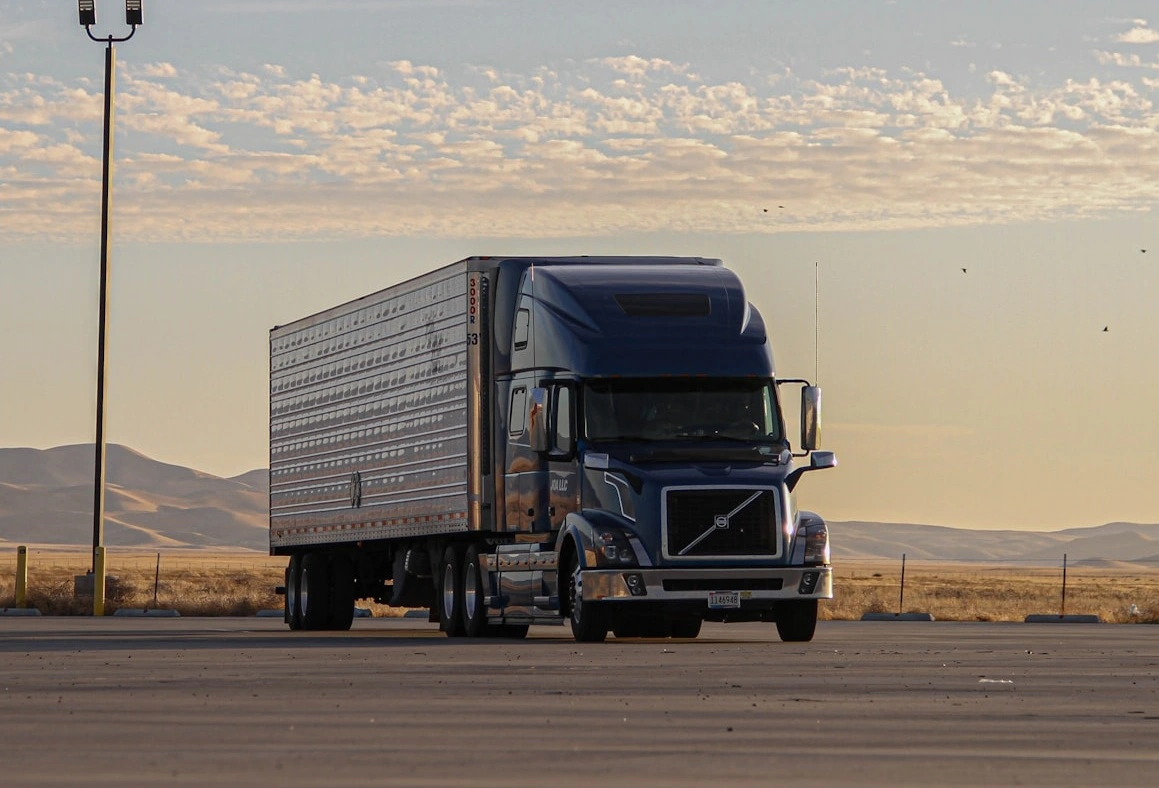
Trucking Safety Technology: How Modern Tech is Reducing Accidents
Picture a loaded semi-truck barreling down I-10 outside Houston at 65 mph when traffic suddenly stops. Ten years ago, the outcome depended entirely on whether the driver was paying attention. Today, that same truck can detect the hazard, warn the driver, and slam its own brakes -- all within a fraction of a second. That shift from "hope the driver reacts in time" to "the truck itself intervenes" is the single biggest change in commercial trucking safety since the seatbelt.
The Evolution of Trucking Safety
If you talked to a fleet safety director in 2005, their world revolved around pre-trip inspections, defensive driving courses, and hoping the FMCSA auditor didn't find too many logbook violations. Those fundamentals still matter, but the landscape has changed dramatically. Over the past 15 years, an explosion of electronic safety systems now actively step in to prevent accidents -- and the data from NHTSA backs it up: technology-equipped trucks consistently post lower crash rates than older rigs running without these systems.
The transition began with relatively simple additions like anti-lock braking systems (ABS) in the 1990s and has accelerated to include sophisticated sensor arrays, machine learning algorithms, and vehicle-to-vehicle communication systems. Today's commercial trucks can detect hazards, alert drivers, and even apply brakes autonomously to avoid collisions.
What makes this shift real -- not just marketing talk -- is that the money is following the technology. Federal regulations now mandate several of these systems, and insurance underwriters are voting with their wallets, offering premium discounts of 5-15% for carriers running full safety suites. When both regulators and insurers push in the same direction, adoption stops being optional pretty quickly.
Automatic Emergency Braking (AEB)
Automatic Emergency Braking represents one of the most significant safety advances in commercial trucking history. AEB systems use radar, cameras, or lidar sensors to continuously monitor the roadway ahead. When the system detects an imminent collision with a vehicle, pedestrian, or obstacle, it first alerts the driver. If the driver fails to respond in time, the system automatically applies the brakes.
NHTSA studies demonstrate that AEB-equipped trucks experience 40-50% fewer rear-end crashes compared to trucks without the technology. This is particularly important because rear-end collisions represent approximately 22% of all truck crashes, often resulting in severe injuries when a loaded semi-truck strikes a passenger vehicle.
The Insurance Institute for Highway Safety (IIHS) found that AEB with forward collision warning reduced rear-end crash rates by 41% and injury crash rates by 43%. These numbers have prompted regulatory action. NHTSA announced plans to mandate AEB on all new heavy-duty trucks, though implementation timelines continue to evolve through the rulemaking process.
Modern AEB systems operate at highway speeds and can detect vehicles ahead even in challenging conditions like rain, fog, or darkness. Advanced versions incorporate pedestrian detection and can differentiate between stationary objects, moving vehicles, and vulnerable road users.
Forward Collision Warning Systems
Forward Collision Warning (FCW) systems serve as the alert component that often pairs with AEB. Using radar and camera technology, FCW monitors the distance and closing speed between the truck and vehicles ahead. When sensors detect a potential collision, the system provides visual, audible, or haptic warnings to the driver.
The key difference between FCW and AEB is intervention: FCW warns the driver but does not apply brakes automatically. Many carriers implement FCW as a driver training tool, using alert frequency to identify drivers who follow too closely or fail to anticipate traffic changes.
Effectiveness data shows FCW alone reduces rear-end crashes by approximately 22%. When combined with AEB, the reduction increases dramatically. The technology proves particularly valuable in preventing multi-vehicle pileups on highways, where a truck driver's delayed reaction to sudden traffic stoppage can result in catastrophic consequences.
Lane Departure Warning and Lane Keep Assist
Lane departure crashes account for a significant portion of truck accidents, particularly run-off-road incidents and sideswipe collisions. Lane Departure Warning (LDW) systems use cameras to track lane markings and alert drivers when the vehicle begins to drift without a turn signal activated.
Lane Keep Assist (LKA) takes this technology further by providing steering input to guide the truck back into its lane. For commercial trucks, which are particularly susceptible to rollover crashes when leaving the roadway, these systems offer critical protection.
NHTSA data indicates that LDW systems reduce single-vehicle, sideswipe, and head-on crashes by approximately 11%. When combined with LKA, the reduction increases to around 21%. These systems prove especially effective in preventing accidents caused by driver fatigue, distraction, or medical emergencies.
Modern lane-keeping systems account for the unique challenges of commercial trucks, including trailer sway, crosswinds, and road crown. Calibrated sensitivity settings prevent excessive alerts on poorly maintained roads while still providing critical warnings when genuine drift occurs.
Technology Impact Statistics
- Automatic Emergency Braking: 40-50% reduction in rear-end crashes
- Electronic Stability Control: 40% reduction in rollover crashes
- Lane Departure Warning: 11% reduction in single-vehicle crashes
- Forward Collision Warning: 22% reduction in rear-end collisions
- Video Event Recorders: 52% reduction in at-fault incidents (fleet average)
- Telematics Systems: 30% improvement in driver behavior scores
Sources: NHTSA, IIHS, FMCSA, American Transportation Research Institute
Electronic Stability Control (ESC)
Since August 2017, Electronic Stability Control has been mandatory on all newly manufactured truck tractors. This technology has proven to be one of the most effective safety interventions in commercial vehicle history, directly addressing the industry's most deadly crash type: rollovers.
ESC systems continuously monitor vehicle dynamics including steering angle, lateral acceleration, and individual wheel speeds. When sensors detect that the truck is beginning to skid or tip, the system automatically applies brakes to individual wheels and reduces engine power to restore stability.
Research demonstrates that ESC reduces rollover crashes by approximately 40% and loss-of-control crashes by 35%. For commercial trucks carrying cargo, particularly at highway speeds, this technology prevents scenarios where driver overcorrection or excessive speed in curves would otherwise result in the vehicle tipping over.
The system operates transparently to drivers in normal conditions but intervenes decisively during critical moments. By preventing rollovers, ESC not only saves lives but also prevents the road closures and hazardous material spills that often accompany commercial truck rollovers.
Dashcams and Video Event Recorders
Video technology has revolutionized both accident prevention and liability determination in trucking. Modern video event recorders capture forward-facing roadway footage and driver-facing cabin footage, triggered automatically by hard braking, acceleration, cornering, or collision events.
Forward-facing cameras provide irrefutable evidence of road conditions, traffic behavior, and accident circumstances. This footage protects carriers from fraudulent claims while holding drivers accountable for at-fault behavior. Driver-facing cameras detect distraction, drowsiness, cellphone use, and other dangerous behaviors in real time.
This is where things get genuinely interesting for fleet operators: carriers report an average 52% reduction in at-fault incidents after implementing video event recorders paired with driver coaching programs. That number surprised us too when we first dug into it, but the logic is straightforward. When drivers know the camera is rolling and that footage will actually be reviewed after a hard-braking event, behavior changes fast. It is one of the clearest examples of a technology paying for itself within months, not years.
Advanced systems now incorporate artificial intelligence that can detect distracted driving, smoking, eating, or cellphone use and provide in-cab alerts. Some systems even monitor eye movement and head position to identify drowsiness before a driver falls asleep at the wheel.
Beyond safety improvements, video systems dramatically reduce insurance costs and litigation expenses. Defense attorneys and insurance adjusters consider video footage the gold standard for determining fault, often resolving cases that would otherwise require years of litigation.
Telematics and Fleet Management Systems
Think of telematics as the nervous system of a modern fleet. These systems collect and transmit real-time data about vehicle location, speed, fuel consumption, engine performance, and driver behavior -- giving fleet managers a live dashboard of everything happening across dozens or even hundreds of trucks at once.
What we have observed in our data is that the carriers investing heavily in telematics tend to show noticeably cleaner safety records over time. The platforms monitor harsh braking, rapid acceleration, excessive speeding, sharp cornering, and even seatbelt usage. Managers get immediate alerts for high-risk events and can pull detailed reports to spot patterns -- like a driver who consistently hard-brakes on the same stretch of I-95 every Tuesday evening.
The American Transportation Research Institute found that carriers using comprehensive telematics systems experience approximately 30% fewer accidents than those relying solely on traditional safety programs. The technology enables data-driven safety management rather than reactive responses to incidents.
Predictive maintenance capabilities represent another critical safety benefit. Telematics systems monitor vehicle diagnostics and alert fleet managers to developing mechanical issues before they result in roadside breakdowns or equipment failures that cause accidents. Addressing issues like brake wear, tire pressure irregularities, or engine problems before vehicles leave the yard prevents crashes caused by mechanical failure.
Blind Spot Detection and 360-Degree Camera Systems
Commercial trucks have substantial blind spots, particularly on the right side, directly behind the trailer, and in front of the cab. These "no-zones" create situations where passenger vehicles, motorcycles, or pedestrians become invisible to truck drivers, leading to sideswipe, backing, and lane-change accidents.
Blind spot detection systems use radar sensors mounted on both sides of the truck and trailer to detect vehicles in adjacent lanes. When a vehicle enters the blind spot, the system illuminates a warning light in the driver's side mirror. If the driver activates a turn signal while a vehicle occupies the blind spot, the system provides an audible alert.
360-degree camera systems eliminate blind spots entirely by providing a bird's-eye view of the vehicle's surroundings. Multiple cameras mounted around the truck and trailer feed into a display screen showing the driver a composite overhead view, particularly valuable during backing maneuvers and tight urban navigation.
These technologies prove especially effective in preventing the tragic accidents that occur when trucks change lanes into passenger vehicles or back over pedestrians in loading areas. IIHS research indicates that blind spot detection systems reduce lane-change crashes by approximately 14%.
What to Ask Your Carrier About Safety Tech
If you're hiring a trucking company or evaluating carrier safety, ask these questions:
- Are your trucks equipped with Automatic Emergency Braking (AEB)?
- Do you use forward-facing and driver-facing dashcams?
- What telematics platform do you use to monitor driver behavior?
- Are your vehicles equipped with blind spot detection and lane departure warning?
- How do you use technology data in driver training and coaching?
- What percentage of your fleet has Electronic Stability Control?
- Do you provide drivers with real-time feedback on safety events?
Carriers committed to safety invest in technology and use data to continuously improve performance.
Tire Pressure Monitoring Systems (TPMS)
Here is a stat that doesn't get enough attention: tire failures cause roughly 30,000 accidents every year in the U.S., and commercial trucks take a disproportionate share of that number because of the loads they haul. A fully loaded trailer puts enormous stress on its 18 tires, and one blowout at highway speed can turn a routine haul into a disaster. Tire Pressure Monitoring Systems address this by continuously tracking pressure and temperature, flagging dangerous conditions well before a catastrophic failure.
Underinflated tires generate excessive heat, accelerate tread wear, and dramatically increase blowout risk. A tire blowout on a loaded semi-truck at highway speed often results in loss of control, potentially causing rollovers or multi-vehicle crashes. TPMS prevents these scenarios by detecting pressure loss early.
Beyond safety benefits, TPMS delivers substantial fuel efficiency improvements. Properly inflated tires reduce rolling resistance, improving fuel economy by 3-5%. For large fleets operating hundreds of vehicles, this translates to significant cost savings while simultaneously reducing accident risk.
Advanced TPMS systems provide real-time alerts to drivers and transmit data to fleet management systems, enabling proactive maintenance scheduling. By addressing tire issues before vehicles leave the yard, carriers reduce roadside breakdowns and the secondary accidents often caused by disabled vehicles on highway shoulders.
Electronic Logging Devices (ELDs)
Since December 2017, federal regulations have required most commercial truck drivers to use Electronic Logging Devices to track hours of service. While primarily a compliance tool, ELDs have significantly impacted safety by reducing driver fatigue, one of the leading causes of truck accidents.
Before ELDs, paper logbooks allowed drivers to falsify records, drive beyond legal limits, and operate while dangerously fatigued. Electronic logging devices automatically record driving time, making it virtually impossible to exceed hours-of-service limits without creating a verifiable violation.
FMCSA data indicates that ELD implementation has reduced hours-of-service violations by approximately 50%. While fatigue-related crashes are difficult to measure definitively, studies suggest a meaningful reduction in accidents linked to drowsy driving since the mandate took effect.
Modern ELD systems integrate with telematics platforms, providing comprehensive fleet management capabilities beyond basic hours-of-service compliance. Drivers benefit from automated record-keeping that eliminates paperwork, while carriers gain real-time visibility into driver availability and compliance status.
For a detailed examination of ELD regulations, compliance requirements, and impact on driver scheduling, see our comprehensive guide on the ELD mandate.
Emerging Technologies
The safety technologies described above represent current, widely deployed systems. However, the next generation of trucking safety innovation is already in development, promising even more dramatic accident reductions.
Truck Platooning
Platooning technology allows multiple trucks to travel in close formation, connected through vehicle-to-vehicle (V2V) communication and automated braking systems. The lead truck controls acceleration and braking for following vehicles, reducing following distances while maintaining safety through instant electronic response times.
Platooning offers substantial fuel savings through reduced aerodynamic drag and improved traffic flow. Safety benefits include elimination of human reaction time in braking scenarios and reduced driver fatigue through partial automation. Several states are conducting pilot programs, though widespread adoption remains years away pending regulatory frameworks.
Autonomous Trucks
Fully autonomous commercial trucks represent the ultimate extension of safety technology, removing human error from the equation entirely. Multiple companies are developing self-driving truck systems, with limited deployments already underway on specific highway routes.
Autonomous systems use lidar, radar, cameras, and artificial intelligence to perceive the environment, make driving decisions, and navigate without human intervention. Proponents argue that removing human factors like distraction, fatigue, and impairment could eventually reduce truck crashes by 90% or more.
However, significant technical, regulatory, and public acceptance challenges remain. Full autonomy on all road types and weather conditions is likely decades away, though limited autonomous operations on highways between distribution centers may become common within the next 5-10 years.
Vehicle-to-Vehicle (V2V) Communication
V2V systems allow vehicles to wirelessly exchange information about speed, position, and direction of travel. This enables cooperative safety features where vehicles warn each other about hazards, traffic conditions, or emergency braking events ahead.
For commercial trucks, V2V technology could provide advance warning of traffic slowdowns miles ahead, allowing drivers to begin braking earlier and more gradually. This technology could also enable priority signaling at intersections and coordinated merging during highway entry.
Industry-wide V2V implementation requires standardization across manufacturers and integration with infrastructure systems. While not yet mainstream, pilot programs demonstrate promising safety and efficiency benefits that could eventually transform highway transportation.
How Technology Affects Carrier Safety Records
The Federal Motor Carrier Safety Administration tracks carrier safety performance through the Safety Measurement System (SMS), which monitors crash history, vehicle maintenance, driver fitness, hours-of-service compliance, and other safety indicators. Carriers with advanced safety technology demonstrate measurably better performance across these categories.
Technology-equipped fleets show lower crash rates, fewer roadside inspection violations, better vehicle maintenance scores, and improved hours-of-service compliance. This translates directly to better FMCSA safety ratings, lower insurance premiums, and enhanced reputation within the industry.
Several large carriers have published data showing 30-50% reductions in preventable accidents after implementing comprehensive safety technology programs. These improvements appear not just in crash statistics but also in leading indicators like hard braking events, speeding violations, and close-following behavior.
For shippers and consumers, a carrier's investment in safety technology serves as a reliable indicator of safety culture and operational excellence. Companies that prioritize technology investment demonstrate commitment to accident prevention rather than merely reacting to regulatory requirements.
When evaluating trucking companies, examining their safety record provides critical insight into their operational practices. Our database allows you to check any carrier's safety record using their USDOT number, revealing crash history, fleet size, and safety ratings.
Understanding Common Crash Causes
While technology addresses many accident scenarios, understanding the root causes of truck crashes helps contextualize how these systems prevent incidents. The most common causes of truck accidents include driver fatigue, distraction, speeding, following too closely, and improper lane changes - precisely the behaviors that modern safety technology detects and prevents.
By examining national truck accident statistics, we can identify trends showing gradual improvement as technology adoption increases across the industry. While crashes still occur, the severity and frequency of preventable accidents continue to decline as safety systems become standard equipment.
The Future of Trucking Safety
If there is one takeaway from spending time with this data, it is that the direction is irreversible. What started with anti-lock brakes and cruise control in the 1990s has snowballed into full electronic safety ecosystems that monitor every aspect of vehicle and driver performance in real time. The trucks rolling off assembly lines in 2026 are fundamentally different machines from what was on the road even five years ago.
Regulatory agencies keep expanding technology mandates, insurers increasingly require advanced safety systems just to write a policy, and shippers are baking technology requirements into their carrier selection criteria. When everyone in the supply chain -- from regulators to brokers to the companies footing the insurance bill -- is demanding these systems, adoption becomes a matter of when, not if. What counted as optional extras in 2015 are now table stakes.
The ultimate goal extends beyond incremental improvement to the elimination of preventable crashes entirely. While human drivers will remain essential for the foreseeable future, technology increasingly serves as a safety net, compensating for momentary lapses and preventing the split-second errors that result in catastrophic accidents.
For anyone sharing the road with commercial trucks, this technological transformation offers reassurance. The massive vehicles traveling America's highways are increasingly equipped with sophisticated systems designed to prevent the very accidents that have historically made trucking dangerous.
Check Carrier Safety Records
Technology represents only one component of carrier safety. When evaluating trucking companies - whether for employment, shipping services, or general awareness - examining their complete safety record provides essential context.
Our database provides free access to FMCSA safety records for every registered motor carrier in the United States. Search by company name or USDOT number to view crash history, fleet size, safety ratings, and enforcement actions. Understanding which carriers prioritize safety - through both technology investment and operational practices - helps you make informed decisions.
The integration of advanced safety technology with rigorous safety management creates the safest possible operating environment. By checking carrier records and asking questions about technology deployment, you can identify companies truly committed to preventing accidents rather than merely managing liability after crashes occur.
Trucking Record Editorial Team
Transportation Safety Analysts
Our editorial team combines expertise in federal transportation policy, FMCSA compliance, and data journalism to deliver accurate, actionable safety intelligence. Every article is reviewed for factual accuracy against official government databases and industry sources.